Labour Series | ProSort Systems
For years, the conversation around automation in pork production has largely centered on labour.
How many hours can be saved? Which manual tasks can be eliminated? Can technology help an operation accomplish more with fewer people?
Those questions still matter, particularly as producers continue to face challenges finding and retaining skilled employees. But they may overlook one of automation’s more important contributions inside the barn: helping people make better decisions.
As more routine processes become automated, the role of the employee begins to change. Instead of spending as much time physically performing repetitive tasks, employees have greater opportunity to observe what is happening in the barn, recognize changes earlier and determine where their attention is most valuable.
That doesn’t make people less important.
It can make good people considerably more valuable.
From Performing Tasks to Managing Systems
Consider the traditional process of sorting pigs.
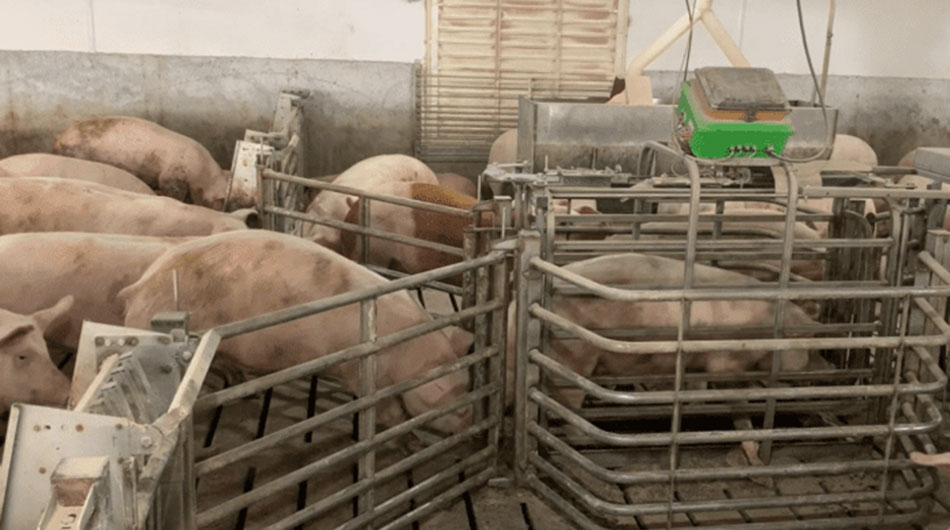
Manual sorting requires people to identify animals, move them, manage gates and pens, and physically complete the sorting process. The immediate objective is straightforward: get the right pigs to the right place.
Automation changes that workflow.
A sorting system can perform much of the repetitive process consistently while also generating information about what is moving through the system. The employee’s responsibility begins shifting from simply performing the task toward understanding and managing the system around it.
Are pigs moving the way they normally do?
Has traffic through a particular area changed?
Are weights trending as expected?
Is additional employee intervention suddenly becoming necessary?
Is something happening in the barn that deserves a closer look?
Those are management questions rather than manual tasks, and they represent an important evolution in how technology can be used on farms.
Automation Doesn’t Eliminate Observation
There is a potential trap with any automated system: assuming that because a process is automated, it no longer requires attention.
In reality, automation can make observation even more important.
A sorting system can consistently perform the job it was designed to do, but it still operates within a changing biological environment. Pig behaviour changes. Stocking pressure changes. Temperatures change. Management routines evolve. Small changes elsewhere in the barn can influence how animals interact with the system.
The technology provides consistency.
The operator provides context.
That distinction matters because data or automation alone cannot always explain why something is changing.
An employee who understands both the pigs and the system can recognize when a change in performance is meaningful, investigate what is happening and determine whether an adjustment is necessary.
Better Information Can Change the Timing of Decisions
One of the most valuable differences between manual and automated management is often not the decision itself.
It’s when the decision gets made.
In a traditional environment, an emerging issue may not become obvious until it creates a visible problem. Labour requirements increase. Pig movement becomes more difficult. Performance starts drifting. Employees notice that something simply isn’t working the way it used to.
By that point, the underlying condition may have been developing for days or weeks.
Automation and production data create an opportunity to recognize changes earlier.
A shift in pig movement, throughput, weight distribution or system interaction may provide an early indication that something deserves attention.
That doesn’t mean every variation requires action. It means managers have another source of information to help decide where to look.
And in increasingly complex production systems, knowing where to direct human attention can be extremely valuable.
The Operator’s Role Is Becoming More Important, Not Less
There is a tendency to describe automation as removing people from production.
A better description may be that automation is changing where people create value.
Technology is particularly good at repetition. It can perform the same process over and over without becoming tired, distracted or inconsistent.
People bring something different.
Experienced employees understand animal behaviour. They recognize subtle changes. They know when something looks unusual. They can connect information from multiple parts of the barn and apply judgment to situations that don’t fit neatly into a predetermined rule.
The strongest production systems use both.
Automation handles repeatable processes and generates information. Employees use that information alongside their own experience to make decisions.
The result isn’t people versus technology.
It’s people working with better tools.
Moving From Reactive to Proactive Management
That combination can also change the management culture inside a barn.
When employees spend most of their day completing necessary manual tasks, management naturally becomes reactive. The urgent work gets done first, and smaller issues may not receive attention until they become larger ones.
Reducing repetitive workload creates room for a different approach.
Employees can spend more time watching pigs, evaluating flow, reviewing information, checking equipment and addressing small inconsistencies before they begin affecting performance.
That is where automation can produce benefits that are difficult to capture in a simple labour calculation.
The value isn’t only the hours removed from a task.
It is also what an experienced employee can accomplish with those hours returned to them.
Data Is Only Useful When Someone Acts on It
Modern barns continue to generate more information, and that trend will only accelerate as sensors, automated equipment and connected production systems become more common.
But collecting more data doesn’t automatically produce better management.
A dashboard can identify a trend. An automated system can record an event. An alert can tell someone that a parameter has changed.
Someone still has to decide what it means.
That may become one of the defining skills of the next generation of barn managers: the ability to combine production experience with information coming from technology.
The best operators won’t necessarily be the people who collect the most data. They’ll be the people who can determine which information matters, connect it with what they’re seeing in the barn and act at the right time.
What This Means for Sorting Systems
Automated sorting provides a practical example of this transition.
The sorter itself is only one part of the production system. Its performance is influenced by pig flow, stocking density, facility layout, feed and water access, employee routines and other barn conditions — subjects we’ve explored throughout this ProSort series.
The opportunity, then, isn’t simply to automate the physical act of sorting.
It’s to use the system as another source of insight into how the barn is functioning.
When pig movement changes, ask why.
When employees need to intervene more frequently, investigate what’s creating the friction.
When performance trends shift, look beyond the equipment and consider what else has changed.
In that environment, the sorter isn’t replacing management.
It’s giving management another set of eyes.
The Next Generation of Barn Management
Labour will remain one of the pork industry’s biggest challenges, and automation will undoubtedly continue playing a role in helping farms accomplish more with the people they have.
But measuring automation strictly by the number of labour hours it eliminates may undervalue what the technology can contribute.
The bigger opportunity is creating production environments where repetitive processes are handled consistently, useful information becomes available sooner, and skilled employees have more time to observe, think and act.
That changes the role of technology.
It also changes the role of the person standing on the barn floor.
The future of automated pork production isn’t likely to be a barn without people. It is more likely to be a barn where good people have better information, better tools and more time to make the decisions that matter.
About George Waldner & ProSort Systems
George Waldner and the team at ProSort Systems have spent decades helping pork producers improve pig flow, labour efficiency and barn management through practical sorting solutions designed around real-world production environments.
Their approach goes beyond equipment, focusing on how technology, pig behaviour, facility design and management practices work together to create more efficient and consistent outcomes across the barn.