ProSort: The Technology You Didn’t Know You Needed By Kyle Schuman, President, Standard Nutrition Services
January 8, 2026

ProSort: The Technology You Didn’t Know You Needed By Kyle Schuman, President, Standard Nutrition Services
(By Jim Eadie SwineWeb.com)
Fourteen years ago, when I was first exposed to sorting technology, I wasn’t sold. At the time, it felt like another system that promised efficiency but added friction in the barn. Training pigs often meant people pushing panels, forcing movement, and wrestling animals through gates. From a labour, animal-handling, and practicality standpoint, it was a non-starter.
What changed wasn’t the idea of sorting — it was our understanding of how pigs actually move and learn.
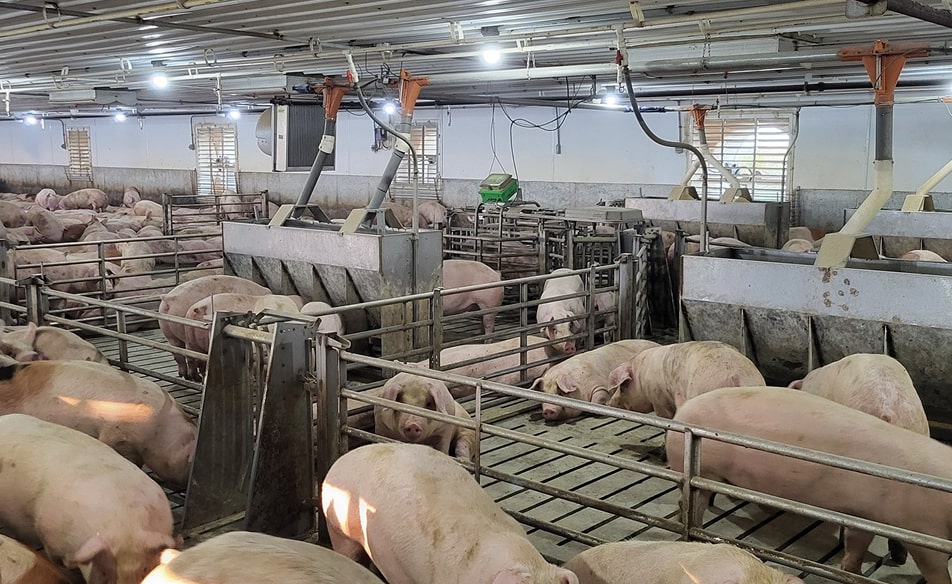
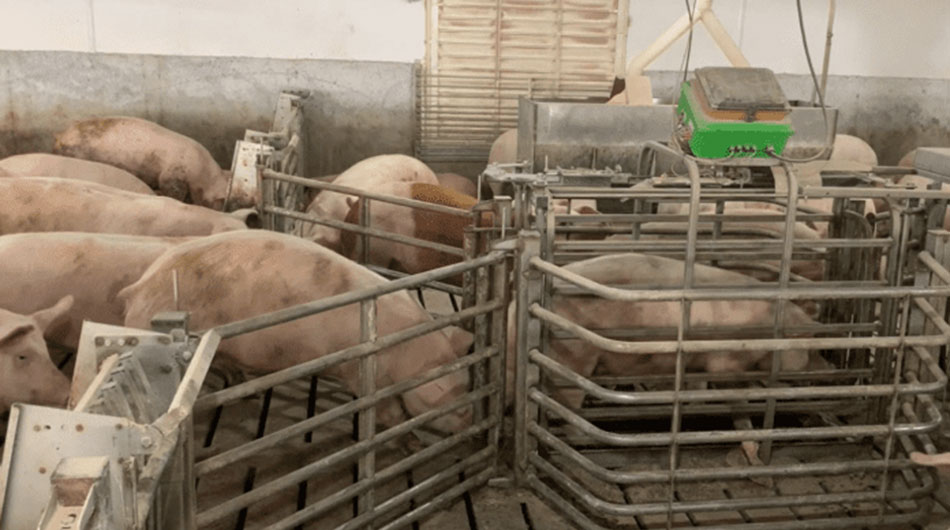
Over time, we realized pigs don’t need to be forced through a process. They learn it themselves. Given the right setup, pigs naturally find their way through openings, close gates behind them, and move through the system without pressure. As we gradually close off gates and limit options, pigs adapt and navigate the system on their own. Once that clicked, the pain point disappeared. What was once a stressful training exercise became a smooth, almost invisible part of daily production.
When we first started working with ProSort, we accepted that there would likely be some level of production drag. What the data has shown since is the opposite. We’re seeing production advantages — both in days to market and overall weights.
This wasn’t just a minor improvement. It fundamentally changed the way we think about animal movement, labour utilization, and animal welfare.
Labour challenges are real — and this technology meets them head-on.
Instead of relying on staff to physically guide pigs through sorting processes, Pro Sort allows animals to participate in their own movement. That means less physical strain on people and more efficient use of labour where it truly adds value. Loading is commonly a major pain point for producers, yet with this system, a single person can load a trailer in 30–40 minutes — no sort crew and no loading crew required.
Biosecurity matters now more than ever.
We’ve had countless biosecurity discussions with growers, and the number-one challenge always comes back to people. Reducing unnecessary contact between people and animals inherently reduces risk. If we can decrease the need for outside visitors entering barns, that’s an absolute win for biosecurity.
Data is power.
Producers now have real-time visibility into weights and movement. Rather than guessing what’s in a pen or making decisions after the fact, operations can actively manage sort outcomes. When pigs reach target size, they move into the market sorter at the right time — helping producers optimize each step of the process while minimizing packer discounts.
This isn’t the technology many of us were skeptical about years ago. The reliance on panels and pressure is gone. What we have today is a system that works with animal behavior, not against it — and quietly solves multiple challenges at once.
For producers — and especially for large integrators — in today’s industry, this is less about adopting a new piece of equipment and more about recognizing how modern systems can remove long-standing friction from production. Sometimes the most impactful technology isn’t the one that demands attention — it’s the one you stop noticing because it simply works.