By Jim Eadie
www.swineweb.com
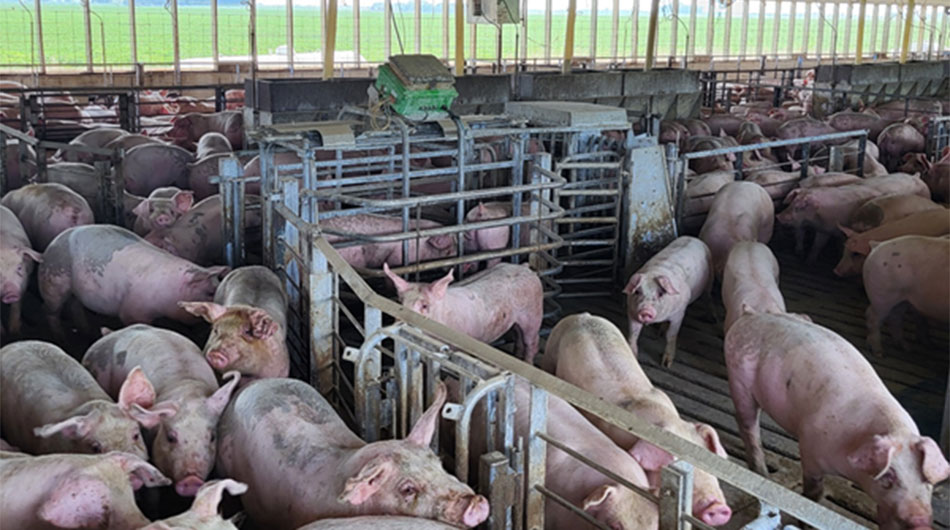
Over the past several production cycles, automated sorting systems have quietly shifted from being viewed as operational upgrades to being evaluated as strategic infrastructure inside large-scale swine production systems.
What was once positioned primarily as a labor-saving tool is increasingly being assessed as a structural method for controlling variability.
And in 2026, variability is margin.
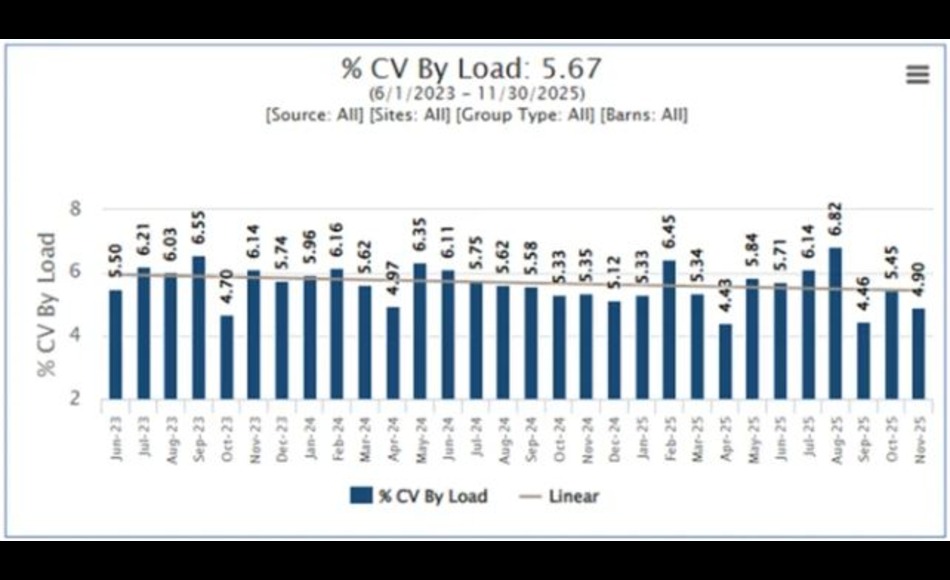
Recent independent field insights gathered across multiple commercial finishing systems indicate directional improvements in weight uniformity, shipment predictability, and labor efficiency where structured sorting systems are implemented. While outcomes vary by system and management approach, the emerging signal across larger production systems is becoming clearer: reducing variability structurally can create economic stability.
The Pressure Points Driving Strategic Change
Large-scale producers today are navigating a more complex production environment than in previous cycles:
Persistent labor constraints
• Increased variability in incoming pig weights
• Greater demand for marketing precision
• Heightened biosecurity and animal flow sensitivity
• Margin compression that magnifies small inefficiencies
In multi-site production systems, incremental inefficiencies compound quickly. What appears minor at the barn level becomes material at system scale.
That compounding effect is what is moving sorting strategy into higher-level operational discussions.
From Labor Tool to Variability Control Mechanism
Industry observations across commercial systems suggest structured automated sorting is delivering impact in several key areas.
Weight Uniformity and Marketing Precision
Uniformity is increasingly being treated as a financial lever.
Producers utilizing structured sorting strategies report tighter shipment groupings and improved predictability in market timing. When weight distribution narrows:
Grid performance becomes more consistent
• Load planning improves
• Transportation efficiency increases
• Days-to-market variability decreases
For large production systems managing multiple barns and sites, predictability strengthens forecasting — and forecasting strengthens marketing leverage.
Labor Stability and Operational Focus
While labor savings often receive initial attention, the more meaningful shift may be labor stability.
Automated sorting reduces:
Manual gate sorting
• Repeated pen reshuffling
• Stress-inducing animal handling
This allows crews to redirect attention toward higher-value activities such as:
Animal observation
• Early health intervention
• Barn-level management consistency
In a constrained labor market, improving workforce stability and retention may carry more long-term value than simple headcount reduction.
Production Visibility and Management Insight
Another emerging benefit producers are beginning to recognize is the management visibility that structured sorting systems can provide.
With continuous weight data and clearer distribution patterns, production teams gain greater insight into how pigs are progressing through the finishing phase. This can allow managers to observe:
Weight distribution trends within groups
• Growth variability between pens or barns
• Shipment readiness developing earlier in the cycle
• Early signals that performance may be diverging from expectations
Rather than relying only on periodic barn checks or manual estimates, production teams begin to see a clearer picture of how the system is performing in real time.
For many operations, this added visibility may ultimately become as valuable as the physical sorting itself.
Flow Stability and Reduced Handling Disruption
Structured sorting systems allow pigs to self-sort within defined parameters, minimizing unnecessary movement and pen disruption.
Improved flow stability supports calmer barns and more predictable finishing trajectories.
Even incremental reductions in handling disruption can become economically meaningful when scaled across thousands of head and multiple production cycles.
Why This Matters at Scale
In smaller operations, incremental improvements may feel marginal.
In large multi-site systems, they multiply.
When layered together:
Improved weight consistency
• Tighter market windows
• Labor efficiency gains
• Reduced flow disruption
• Increased production visibility
the cumulative impact begins to shift from operational convenience toward structural advantage.
Sorting becomes less about equipment — and more about system design.
The Strategic Choice in 2026
Large pork producers are increasingly asking a structural question:
Continue managing variability manually —
or reduce variability systematically.
Those who treat sorting as infrastructure rather than equipment may position themselves for:
Greater operational predictability
• Stronger marketing alignment
• More stable labor structures
• Improved margin protection
In today’s environment, consistency is currency.
And systems that structurally reduce variability may help define the next competitive tier in large-scale pork production.